
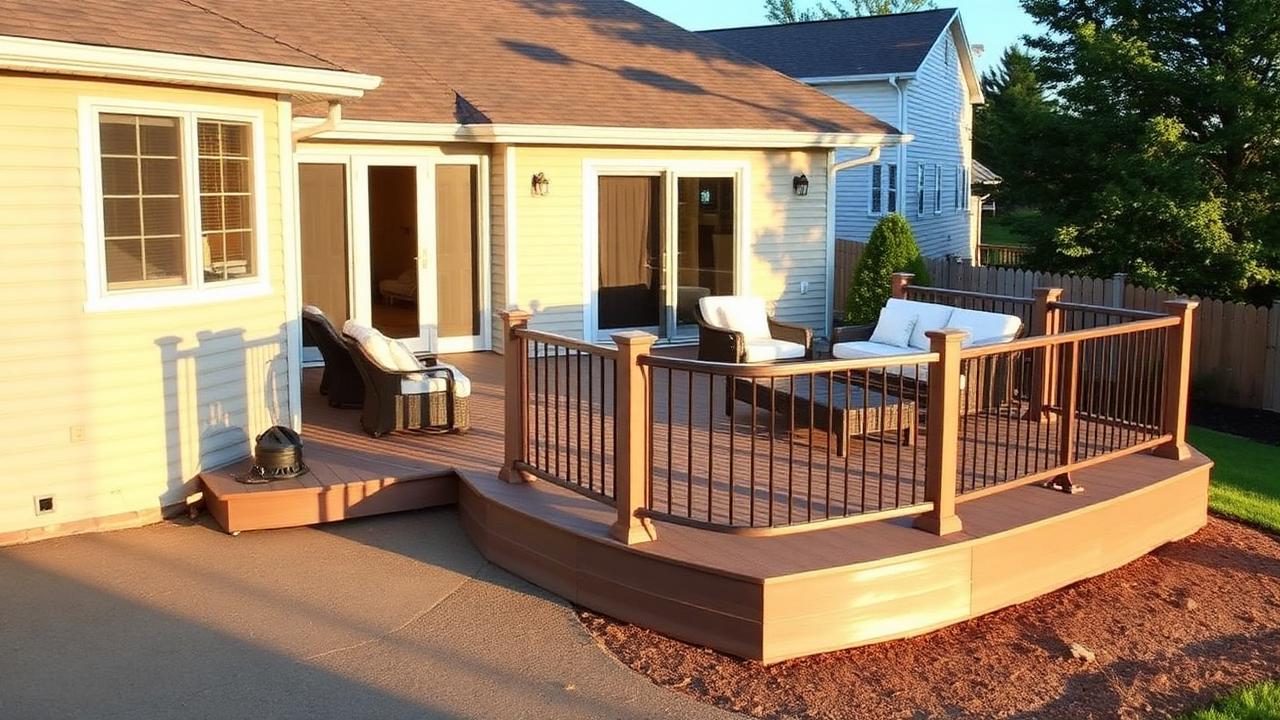
- Typical cost
- $18,000 – $30,000 for a 16x20 deck
- Cost recouped
- Roughly 60–83% depending on material
- Lifespan
- 15 years (wood) / 25–30 years (composite)
Square foot for square foot, outdoor living space is some of the least expensive space you can add to a house. It needs no HVAC, no drywall, and no insulation — but it does need engineering, permits, and honest material math.
Wood vs. composite
Pressure-treated wood costs roughly 30–40% less up front and has historically returned a higher percentage of its cost at resale. The catch is maintenance: cleaning and re-sealing every two to three years, and board replacement starting around year 12.
Composite and PVC decking costs more up front, returns a slightly lower percentage, and eliminates nearly all maintenance. If you plan to stay ten-plus years, the lifetime cost usually favors composite. If you are selling in three years, wood is the better financial bet.
What drives the price
- Height off grade — an elevated deck needs larger footings, taller posts, and stairs, and can double the cost of the same square footage.
- Railing — cable and aluminum systems can be 20% of the total.
- Footings — Ohio frost depth means footings must go below the frost line, typically 32–36 inches. This is not the place to save money.
- Ledger attachment — improper ledger flashing is the leading cause of deck failures and rot behind the siding.
Permits are not optional
Most jurisdictions in Dayton and the Miami Valley require a permit for any deck over 30 inches off grade, and many require one regardless. An unpermitted deck becomes a title problem at closing and an insurance problem after a failure. A member deck builder pulls the permit, sizes the framing to code, and schedules the footing inspection before pouring.
Looking for a deck & outdoor living builder?
HBA Dayton members in the Deck & Outdoor Living Builders category do this work across the Miami Valley.